
Potato Cultivation Guide in Afghanistan
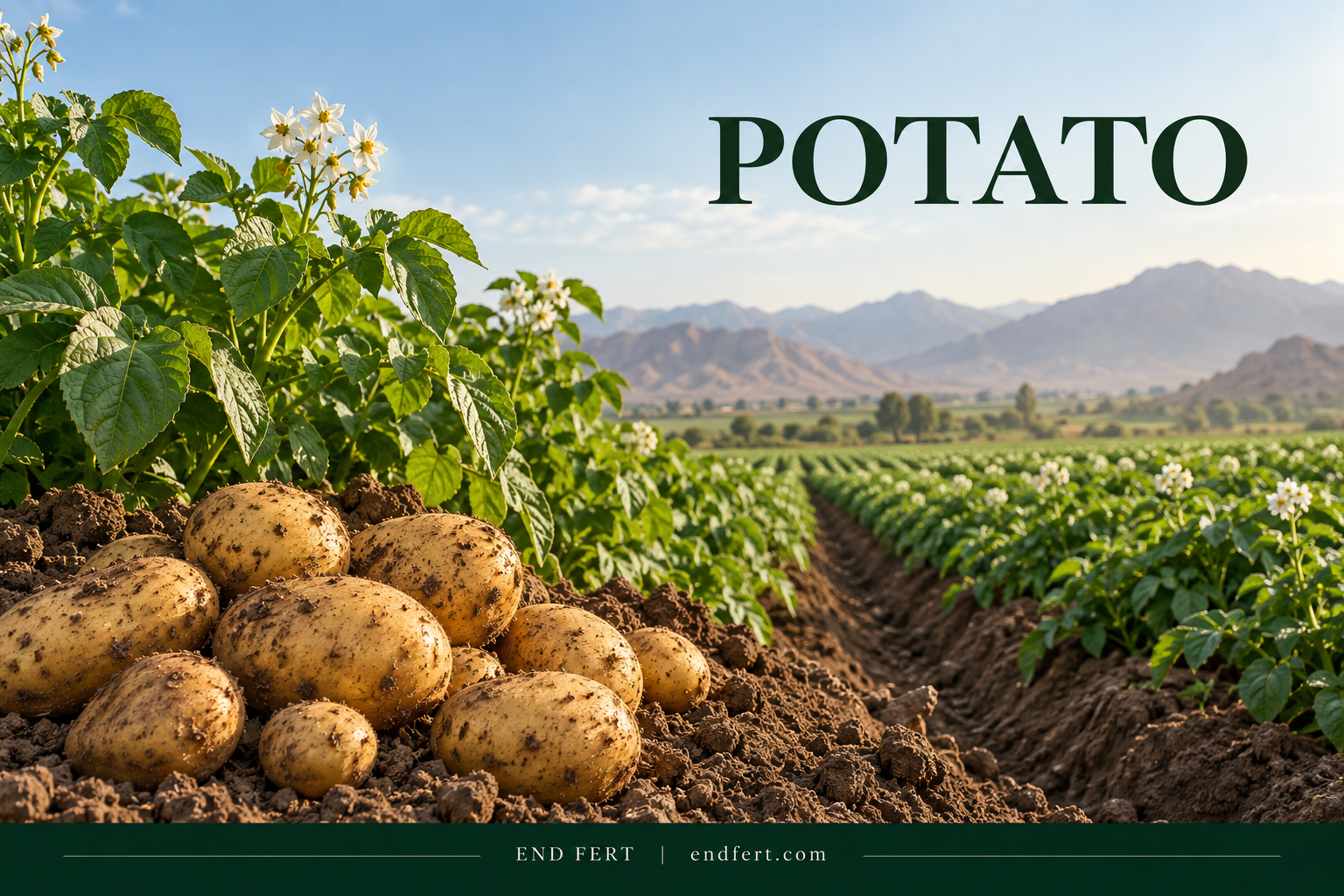
Practical potato production guide for Afghanistan: climate, soil, irrigation, stage-based nutrition, deficiencies, pests, diseases and harvest.
Introduction and importance
Potato is important in cool highland areas. Seed quality, tuber health, friable soil and blight management largely determine marketable yield.
Suitable climate and soil
Cool weather, moderate nights and light-to-loam soil with excellent drainage are preferred. Excess heat restricts tuber initiation.
Land preparation and planting
Plant healthy virus-free seed tubers in warmed soil on ridges at uniform depth and spacing, with at least a three-year rotation.
Irrigation management
Maintain even moisture from tuber initiation through bulking. Strong wet-dry fluctuations increase misshaping, cracking and disease.
Stage-based nutrition
Use basal phosphorus for roots, most nitrogen before tuber initiation and adequate potassium for size and quality. Excess chloride and late nitrogen can reduce quality.
- Stage 1: نشاکاری یا سبزشدنAdjust nutrition to crop demand and laboratory soil and water results. Avoid mixing concentrated fertilizers without a compatibility test.
- Stage 2: رشد رویشیAdjust nutrition to crop demand and laboratory soil and water results. Avoid mixing concentrated fertilizers without a compatibility test.
- Stage 3: گلدهی و تشکیل محصولAdjust nutrition to crop demand and laboratory soil and water results. Avoid mixing concentrated fertilizers without a compatibility test.
- Stage 4: رشد، برداشت و تداوم باردهیAdjust nutrition to crop demand and laboratory soil and water results. Avoid mixing concentrated fertilizers without a compatibility test.
Nutrient deficiencies
Diagnose deficiencies from symptom pattern, affected leaf age, root condition and laboratory analysis. Similar symptoms may also result from salinity, waterlogging, cold or root disease.
Pests and diseases
Colorado potato beetle, potato tuber moth, aphids and wireworms require clean seed, rotation and scouting. Late and early blights, bacterial wilt, Rhizoctonia and viruses require certified seed, rotation and removal of infected plants.
Harvest and storage
Harvest after vine senescence and skin set in reasonably dry soil; protect tubers from light, impact and heat.
Frequently asked questions
What is the best fertilizer for Potato?
There is no single universal formula. The correct choice depends on soil and water analysis, crop stage and yield target.
Products Endfert
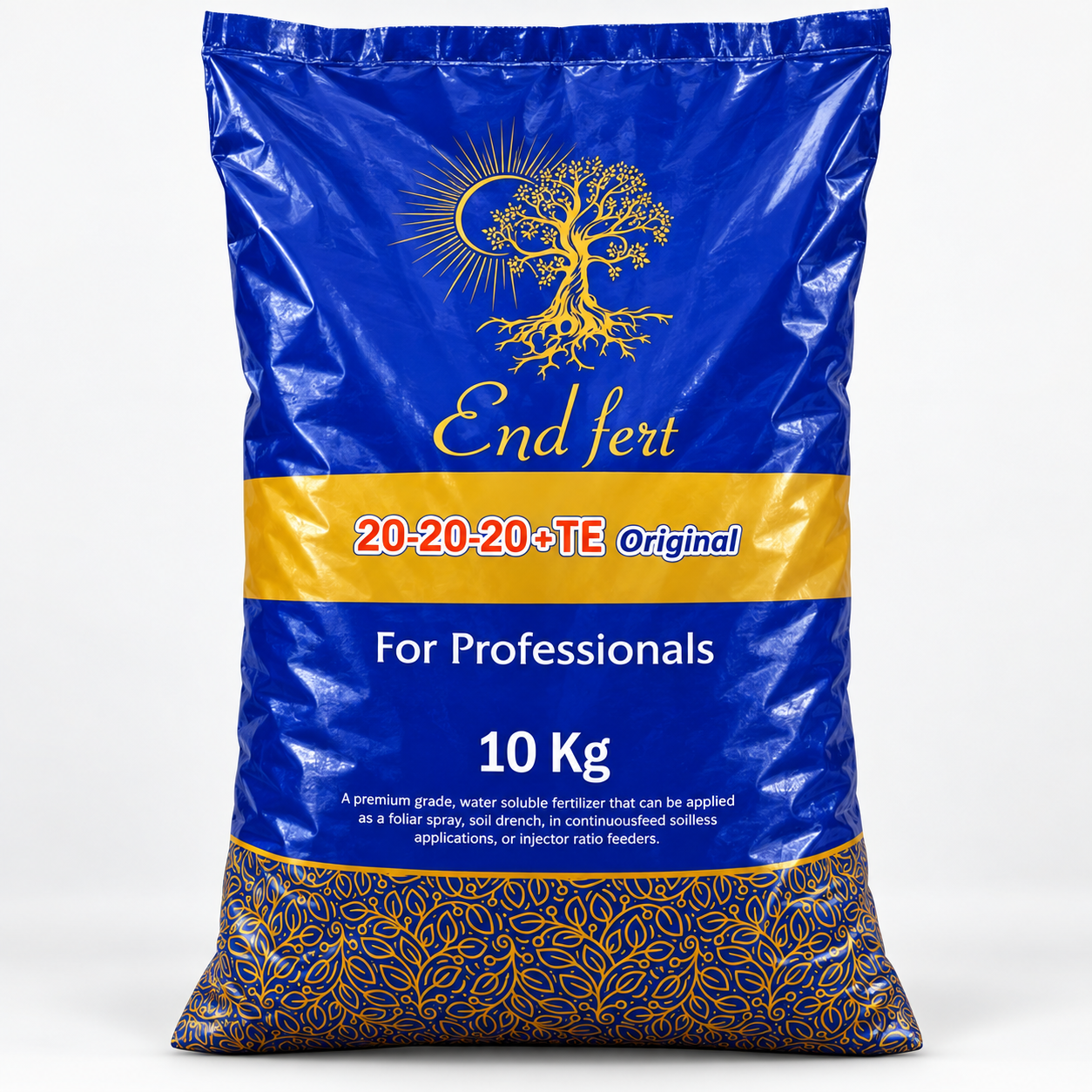
End fert NPK 20-20-20 +TE
N 20% • P₂O₅ 20% • K₂O 20% • TE
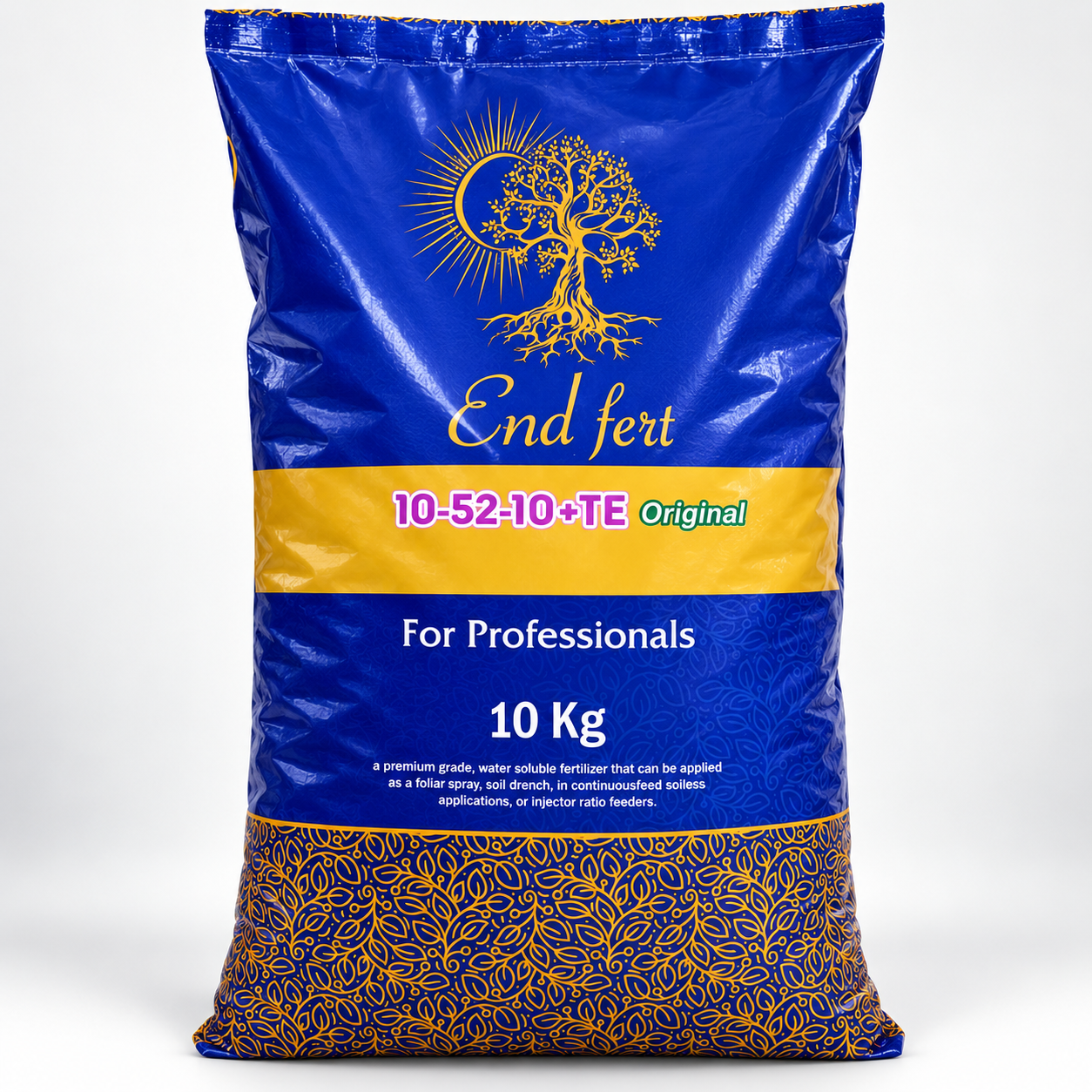
End fert NPK 10-52-10 +TE
N 10% • P₂O₅ 52% • K₂O 10% • TE
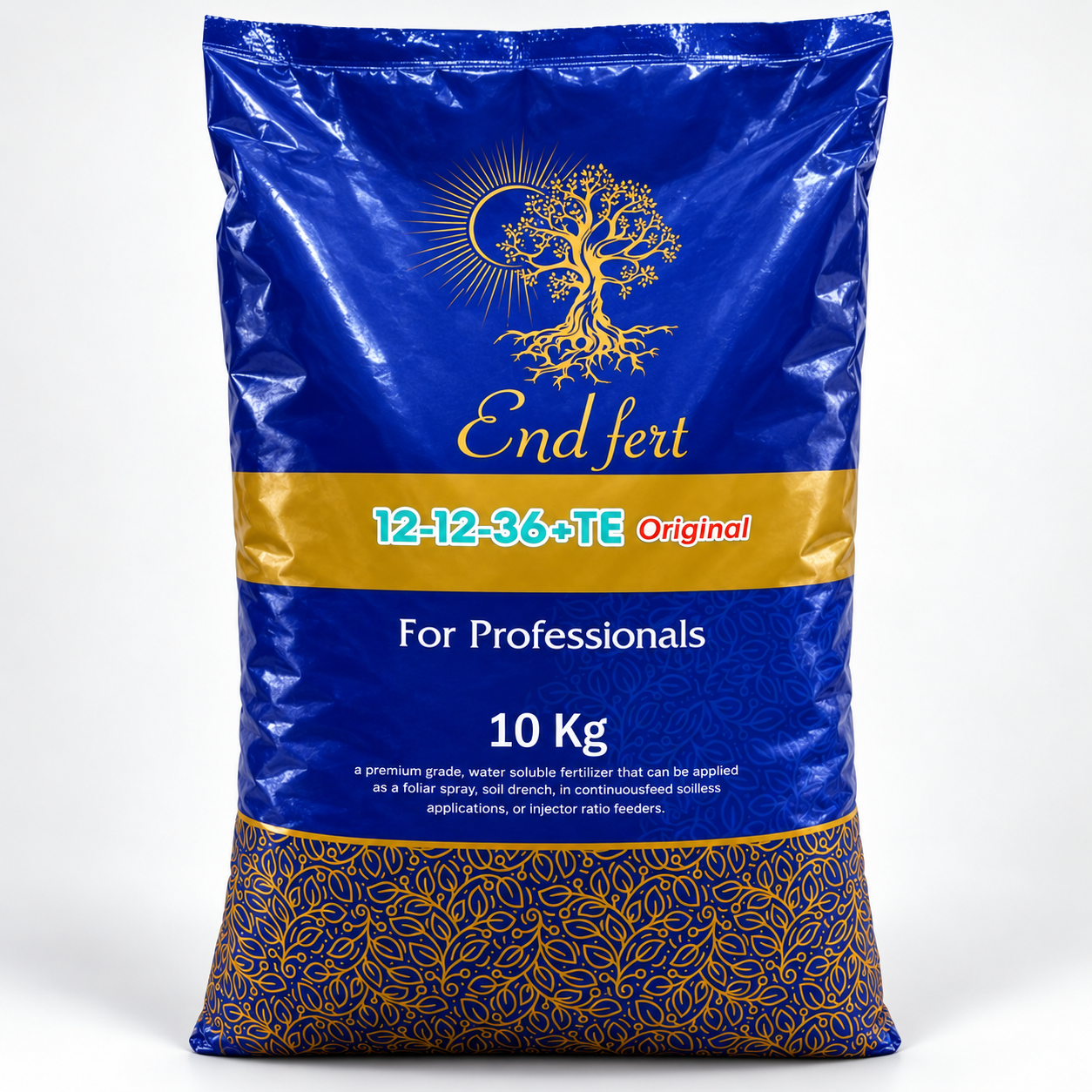
End fert NPK 12-12-36 +TE
N 12% • P₂O₅ 12% • K₂O 36% • TE
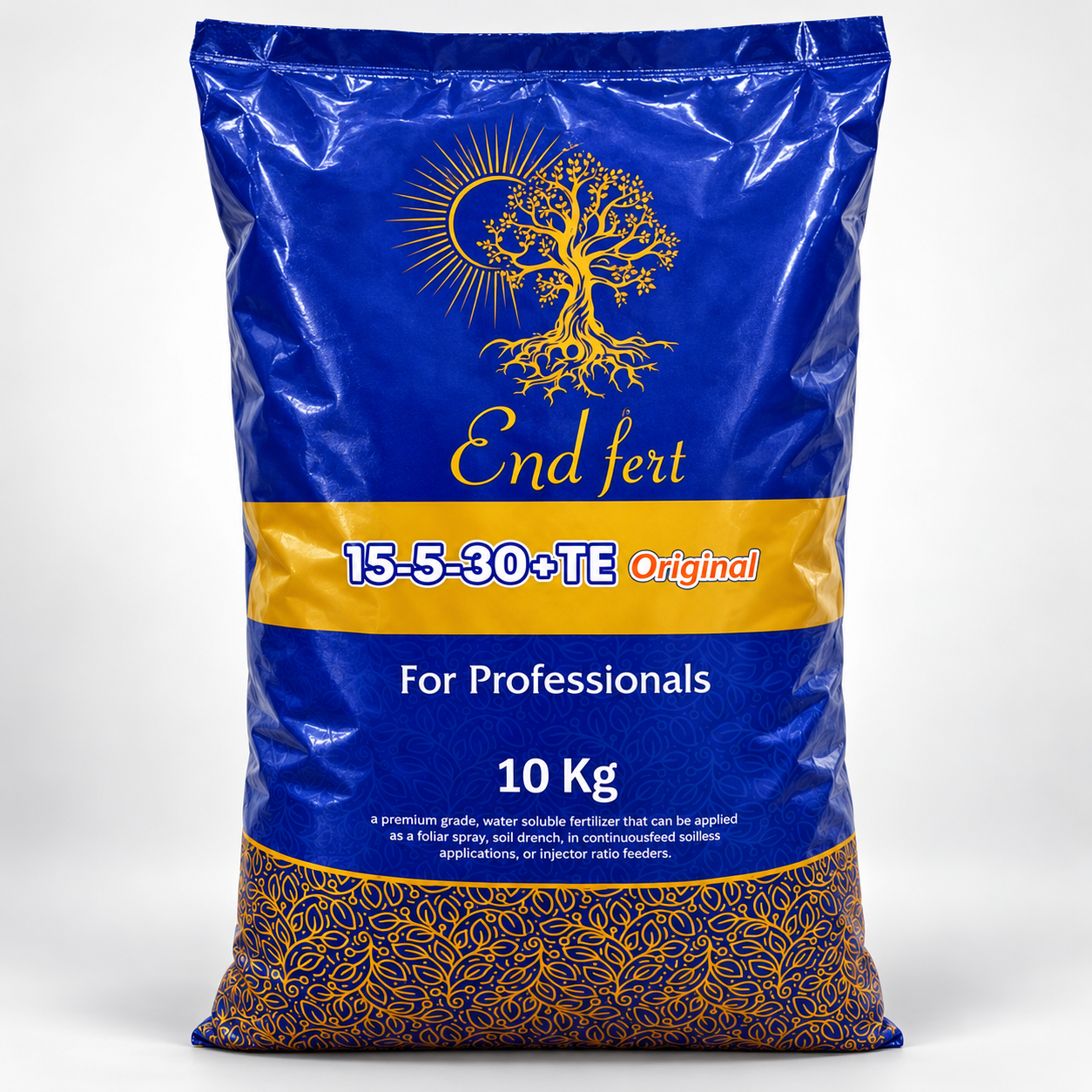
End fert NPK 15-5-30 +TE
N 15% • P₂O₅ 5% • K₂O 30% • TE
Endfert NPK 10-10-40 +TE
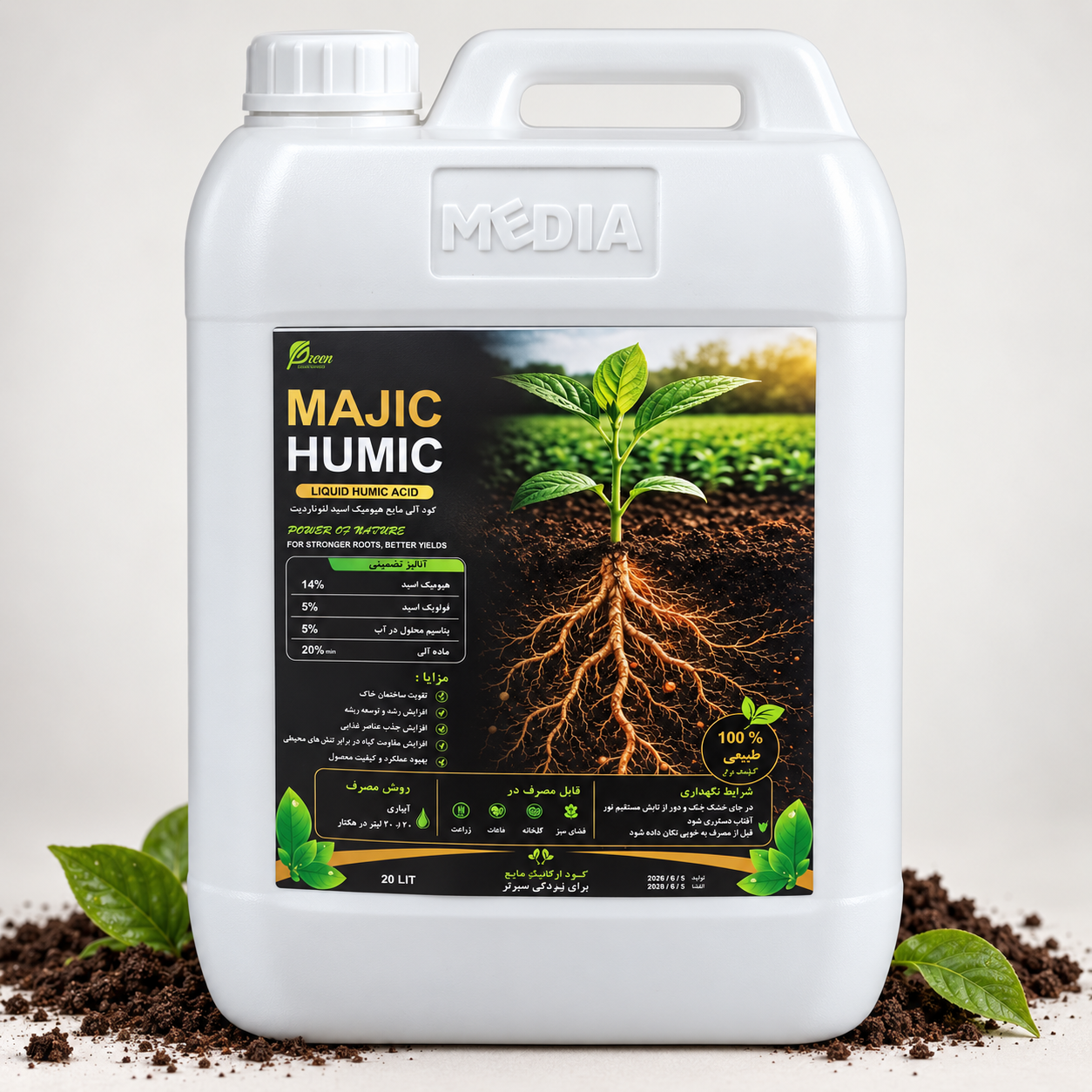
Magic Liquid Humic Fertilizer
Humic acid 14% • Fulvic acid 5% • Water-soluble K₂O 5% • Organic matter ≥ 20%