
Grape Cultivation Guide in Afghanistan
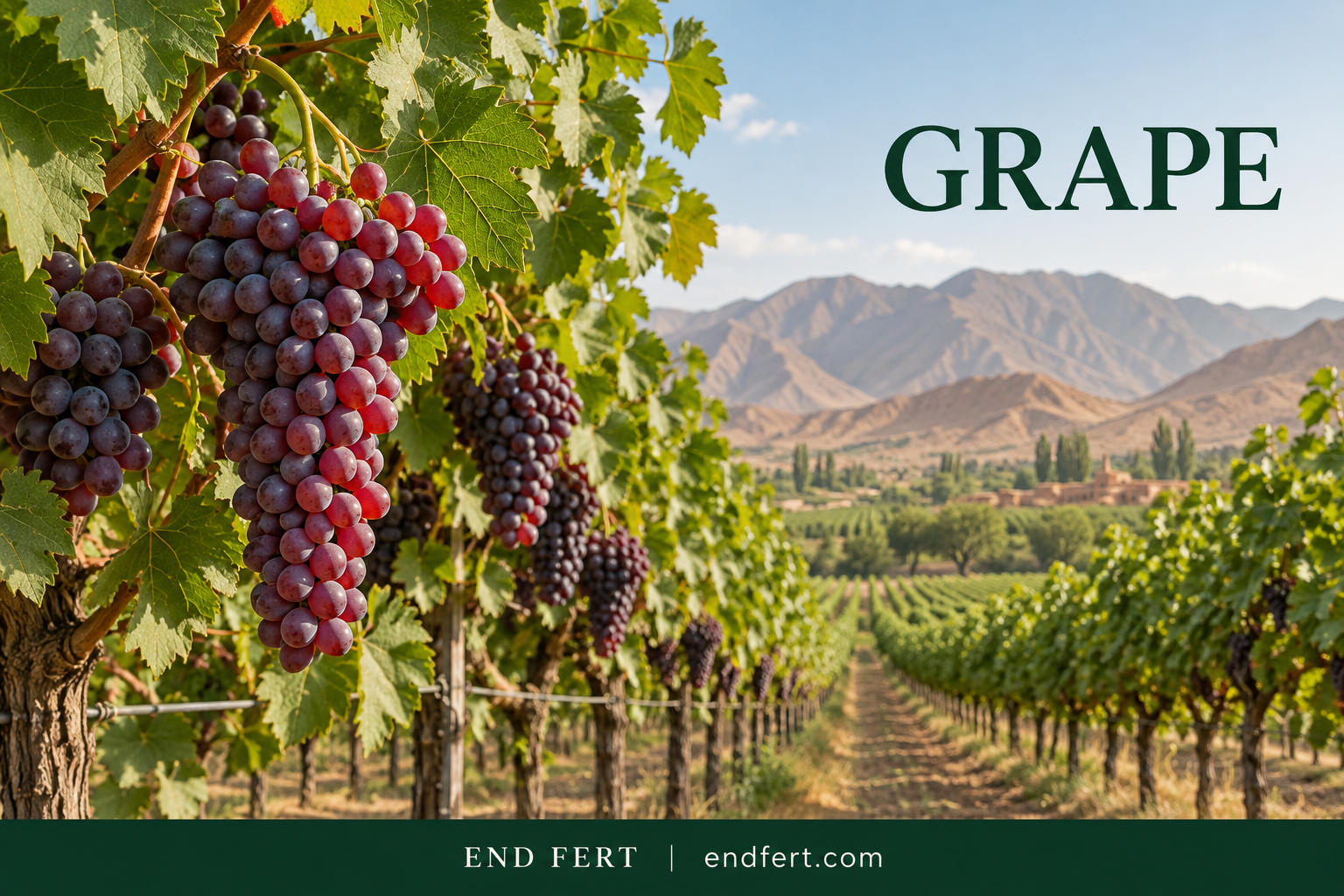
Practical grape production guide for Afghanistan: climate, soil, irrigation, stage-based nutrition, deficiencies, pests, diseases and harvest.
Introduction and importance
Grape is a leading Afghan orchard and export crop for fresh fruit and raisins. Pruning, trellising, canopy light and water management determine bunch quality.
Suitable climate and soil
Warm dry summers and adequate winter chilling are favorable. Deep well-drained soil is preferred and frost pockets damage buds and flowers.
Land preparation and planting
Choose healthy disease-free vines and adapted cultivars or rootstocks, orient rows for light and train vines onto a trellis from the first years.
Irrigation management
Adequate water is needed from budbreak through berry growth; strong fluctuation near ripening increases cracking and heavy irrigation lowers quality.
Stage-based nutrition
Base winter organic matter and phosphorus on testing, control early nitrogen, emphasize potassium from berry set to ripening and correct boron or zinc only after diagnosis.
- Stage 1: خواب و پیش از تورم جوانهAdjust nutrition to crop demand and laboratory soil and water results. Avoid mixing concentrated fertilizers without a compatibility test.
- Stage 2: رشد بهاره و پیش از گلAdjust nutrition to crop demand and laboratory soil and water results. Avoid mixing concentrated fertilizers without a compatibility test.
- Stage 3: تشکیل و رشد میوهAdjust nutrition to crop demand and laboratory soil and water results. Avoid mixing concentrated fertilizers without a compatibility test.
- Stage 4: پس از برداشت و ذخیرهسازیAdjust nutrition to crop demand and laboratory soil and water results. Avoid mixing concentrated fertilizers without a compatibility test.
Nutrient deficiencies
Diagnose deficiencies from symptom pattern, affected leaf age, root condition and laboratory analysis. Similar symptoms may also result from salinity, waterlogging, cold or root disease.
Pests and diseases
Grape berry moths, leafhoppers, mites and mealybugs require bunch and canopy scouting and integrated management. Powdery and downy mildews, Botrytis and trunk diseases require correct pruning, canopy ventilation, tool sanitation and preventive protection.
Harvest and storage
Harvest by sugar, acidity, color and market destination; clip bunches cleanly and cool and grade table grapes promptly.
Frequently asked questions
What is the best fertilizer for Grape?
There is no single universal formula. The correct choice depends on soil and water analysis, crop stage and yield target.
Products Endfert
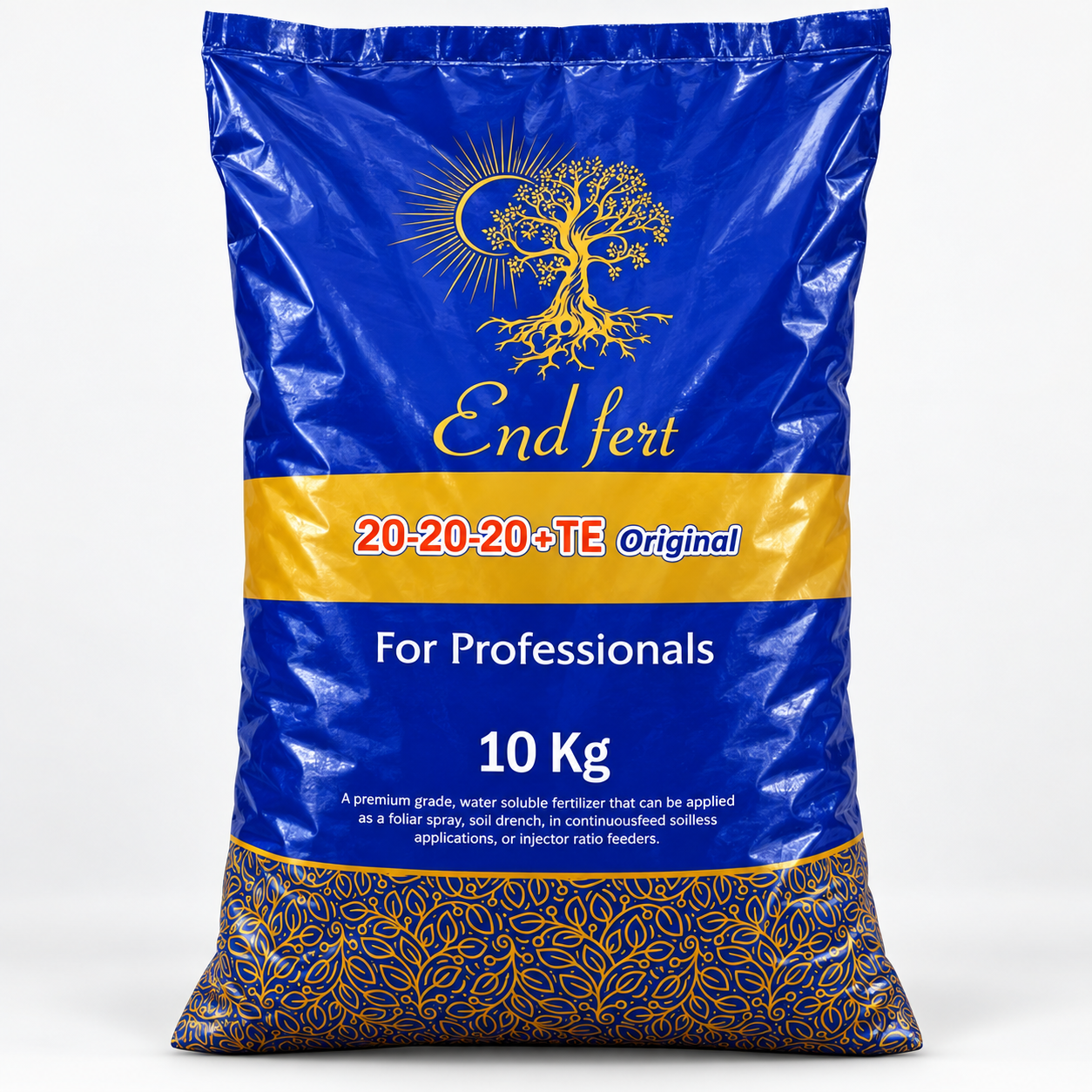
End fert NPK 20-20-20 +TE
N 20% • P₂O₅ 20% • K₂O 20% • TE
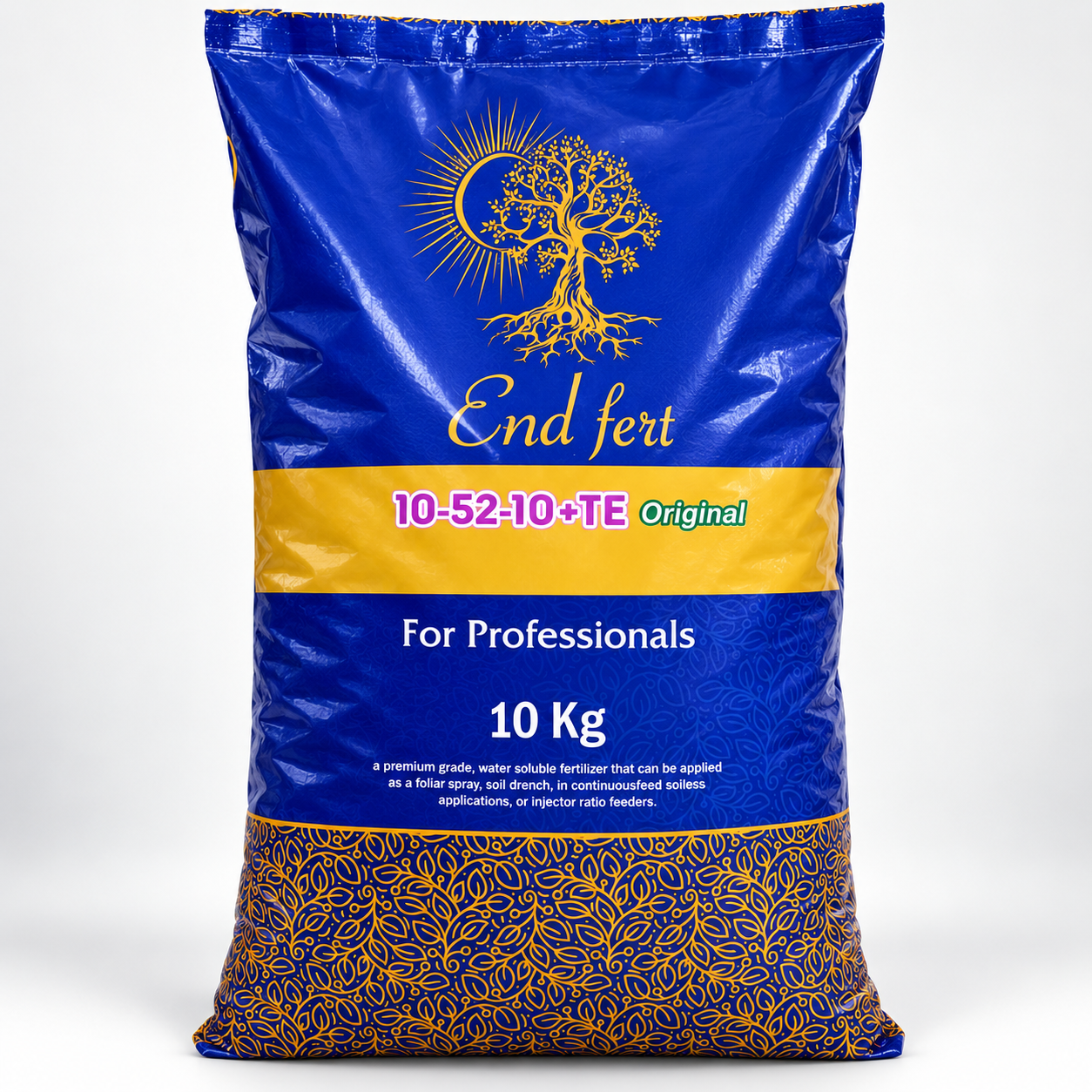
End fert NPK 10-52-10 +TE
N 10% • P₂O₅ 52% • K₂O 10% • TE
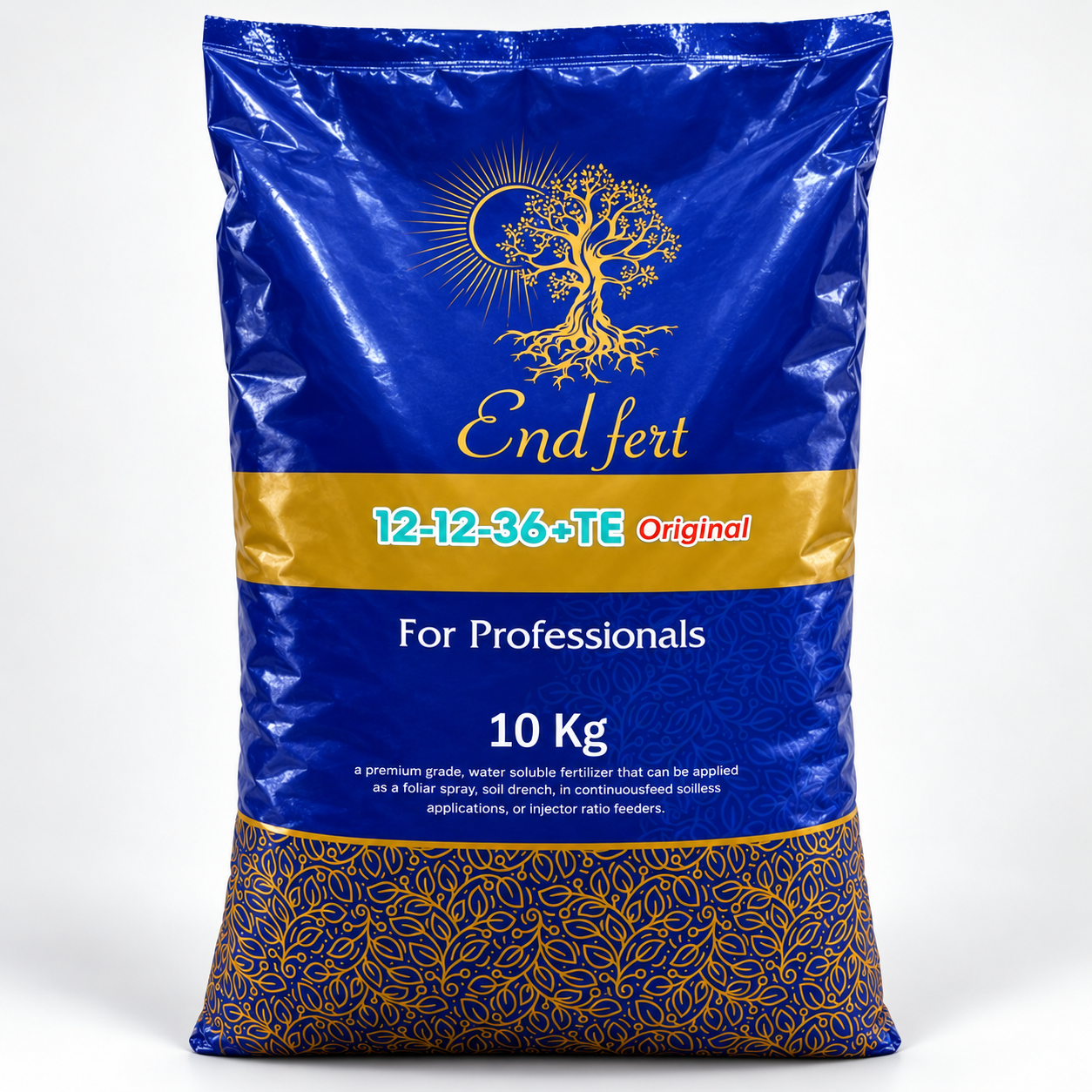
End fert NPK 12-12-36 +TE
N 12% • P₂O₅ 12% • K₂O 36% • TE
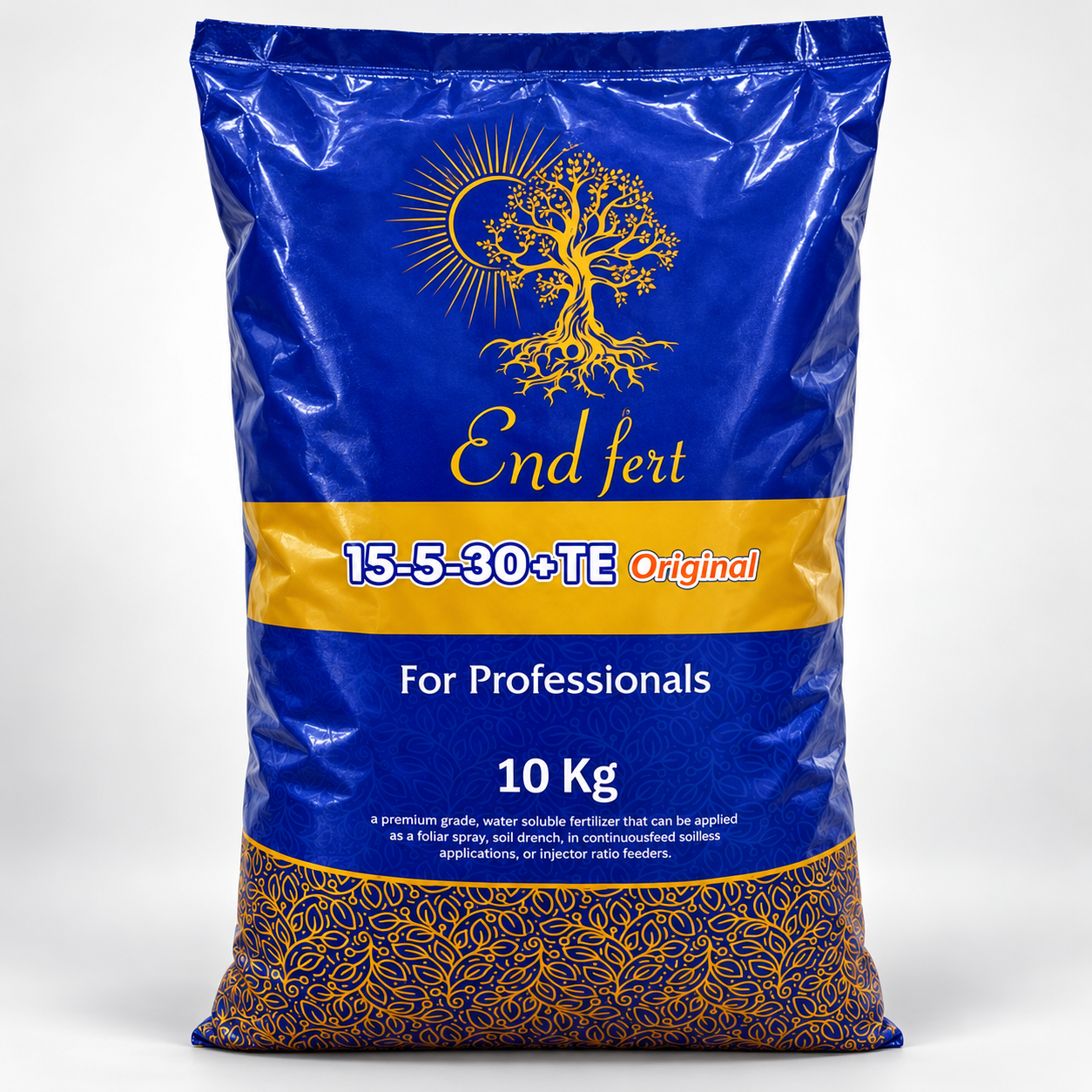
End fert NPK 15-5-30 +TE
N 15% • P₂O₅ 5% • K₂O 30% • TE
Endfert NPK 10-10-40 +TE
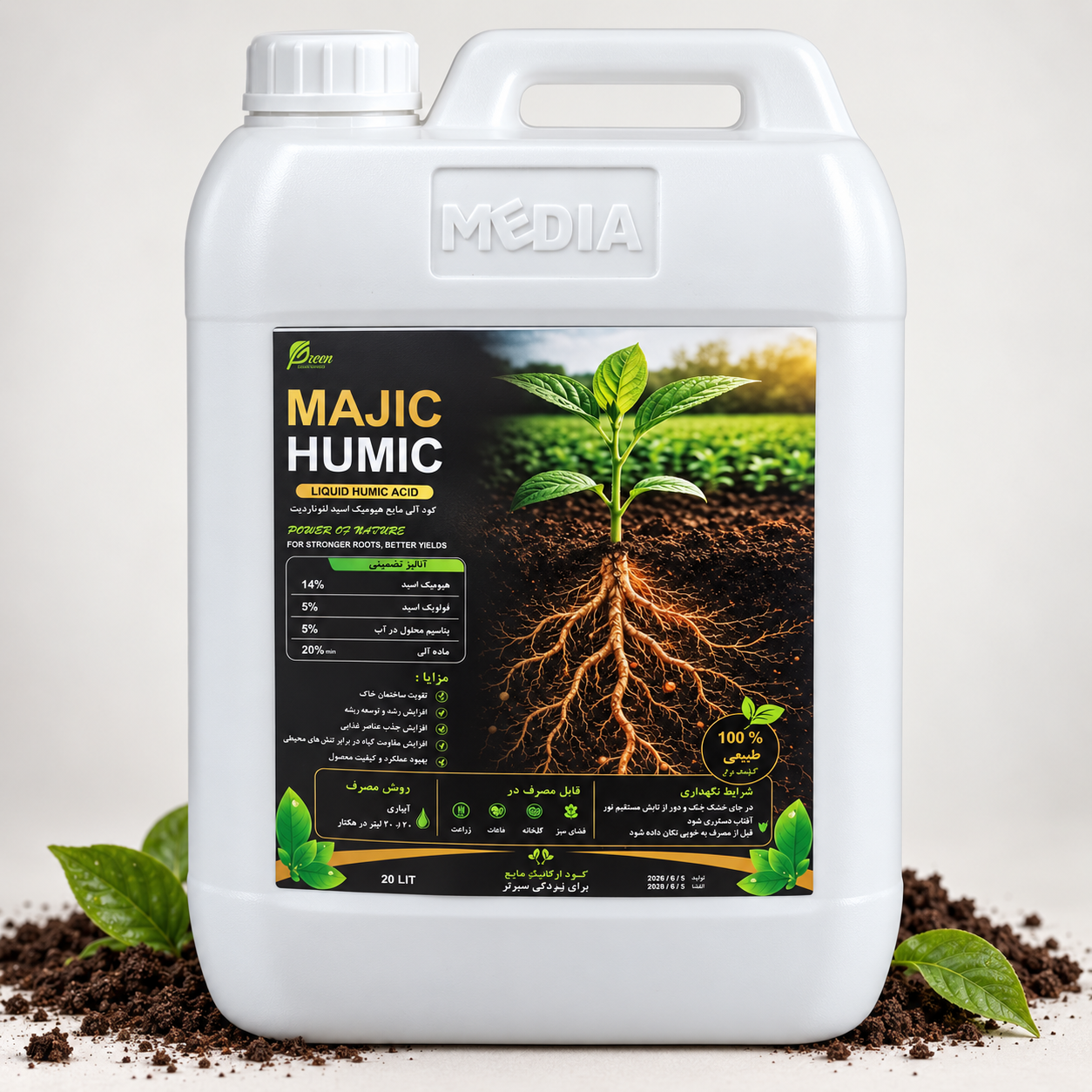
Magic Liquid Humic Fertilizer
Humic acid 14% • Fulvic acid 5% • Water-soluble K₂O 5% • Organic matter ≥ 20%